Moon: A Thoughtful Floral Embroidery Design for Real Projects
First Impressions: Soft, Poetic, and Purposefully Minimal
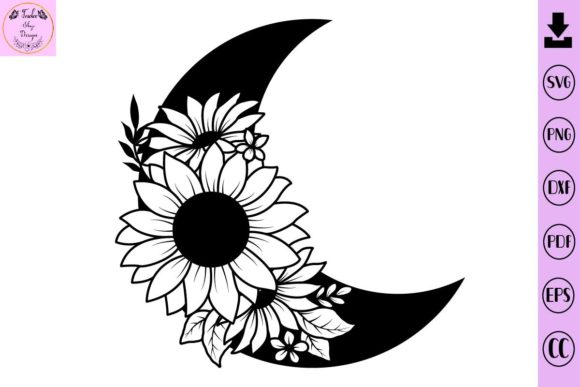
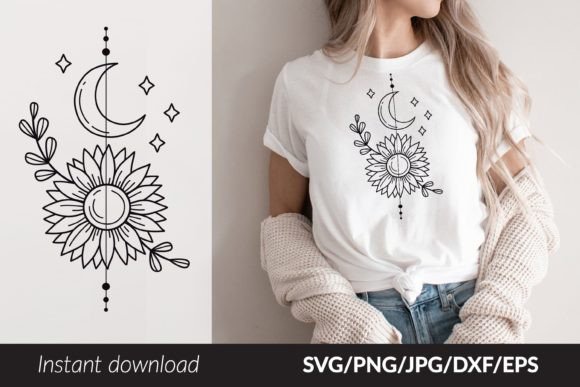
When I opened Moon for the first time—pulling up the PNG preview before even loading it into my embroidery software—I felt that quiet click of recognition. It’s not loud or trendy. It’s a gentle crescent cradling a single stylized bloom, with subtle vine-like stems curling outward just enough to suggest growth without clutter. The lines are clean but not rigid; there’s breathing room between elements, and the negative space feels intentional—not like an afterthought, but part of the design language. As a designer who’s stitched hundreds of floral motifs for baby onesies, boutique aprons, and holiday gift tags, I immediately saw where Moon belongs: in projects where calm elegance matters more than flash.
Real-Life Test: Embroidering a Linen Kitchen Towel for a Local Boutique
Last week, I used Moon on a 14” x 26” natural linen tea towel—part of a small batch for a neighborhood kitchen shop. I chose a soft ecru thread on oat-colored fabric, with light cutaway stabilizer underneath. The result? Crisp satin stitch petals, smooth fill-stitch moon curves, and running-stitch vines that held their shape without puckering. Customers noticed it right away—not because it shouted, but because it *settled* into the towel like it belonged there. One buyer told me she bought two: one for herself, one as a wedding gift. That kind of quiet resonance is rare—and valuable—for any craft business or Etsy seller building a cohesive, thoughtful brand.
Where Moon Shines (and Where It Asks for Care)
Moon works beautifully on stable, medium-weight fabrics: cotton twill for tote bags, fleece-backed sweatshirts, quilting cotton for baby burp cloths, and even lightweight canvas for embroidered patches. Its moderate detail level means it scales well—from a 3” hoop on a child’s cap to a 5.5” version centered on a pillow cover. On dark fabric, it reads clearly with high-contrast thread (think charcoal grey moon + ivory flower), and on light backgrounds, it gains warmth with muted sage or dusty rose thread colors.
But here’s where attention matters: avoid using Moon on highly textured surfaces like bouclé or thick terry cloth without extra stabilizing—it’s delicate enough that dense fabric texture can blur the vine details. Also skip it for ultra-stretchy knits (like jersey) unless you’re pairing it with tear-away + cutaway combo stabilizer and reducing stitch density manually. And while the design doesn’t include tiny lettering or micro-details, its curved edges do require solid hooping—especially on curved surfaces like caps. Always test on scrap first.
Design Integrity Meets Commercial Practicality
As someone who reviews embroidery files for both personal joy and client work, I pay close attention to how a design holds up under real-world conditions—especially washing, wear, and customer perception. Moon passes that test. Its balanced stitch density avoids overloading fabric while still delivering visual weight. There’s no excessive underlay or unnecessary jump stitches—just clean, efficient digitizing that translates reliably across machines. That reliability builds trust: when your Etsy buyer receives a custom embroidered sweatshirt with Moon on the chest, they don’t see “digital file”—they feel intention, care, and handmade quality.
For small shop owners, this design supports brand consistency without demanding uniformity. You can use Moon on a holiday mug wrap, then rework it as a printable mockup for Instagram listings, or layer it subtly into a nursery wall art bundle. Because it’s delivered in multiple formats—including PDF and PNG—it bridges embroidery and print templates seamlessly. Whether you're selling finished products or digital embroidery files, Moon feels like a versatile, respectful asset—not filler.
Practical Designer Notes Before You Stitch
- Always test on scrap fabric—especially if stitching on linen, rayon blends, or dark garments where thread tension shifts visibly.
- Check thread color contrast early. This isn’t a bold graphic—it relies on tonal harmony. Try it in black-and-white mockups to assess legibility.
- Review stitch density in your embroidery software. If scaling beyond 120%, consider slightly increasing underlay or adjusting pull compensation.
- Confirm hoop size compatibility. While Moon fits comfortably in a 4” x 4” hoop at default size, verify dimensions in your editing software before finalizing.
- Inspect corners and curves closely. The vine tips taper gently—make sure they’re not overly thin or fragile for your fabric choice.
- Use proper stabilizer for your base. Light cutaway for stable wovens; medium cutaway + tear-away for knits or textured weaves.
- Verify licensing terms before resale. Since Moon is listed as a Graphics / Print Templates product, confirm whether commercial use covers both finished embroidered goods and redistribution of the digital embroidery file.
Final Thought: Not Just Another Floral SVG
Moon isn’t trying to be everything. It’s a focused, emotionally intelligent embroidery file—one that understands silence, space, and subtlety. In a market flooded with busy, over-digitized florals, it offers clarity. For the craft business owner choosing designs for their next holiday collection, the Etsy seller curating a “slow living” embroidery bundle, or the apparel decorator building a signature look for local boutiques—Moon earns its place not through volume, but through quiet confidence. It stitches cleanly, sells thoughtfully, and stays memorable long after the hoop comes off.